
Noise testing (NVH)
Every sound has a cause. We find it.
End-of-line noise testing with SonicTC.NVH objectively evaluates airborne and structure-borne noise of rotating machinery within the production cycle; the OK/NOK result is available in under one second and is sent to the machine control via industrial communication interfaces.
The method in one sentence.
NVH stands for Noise, Vibration, Harshness – the scientific assessment of noise and vibration behavior of technical parts. RTE measures airborne and structure-borne sound on motors, transmissions, pumps, actuators and comfort components – objectively, reproducibly and in real time.
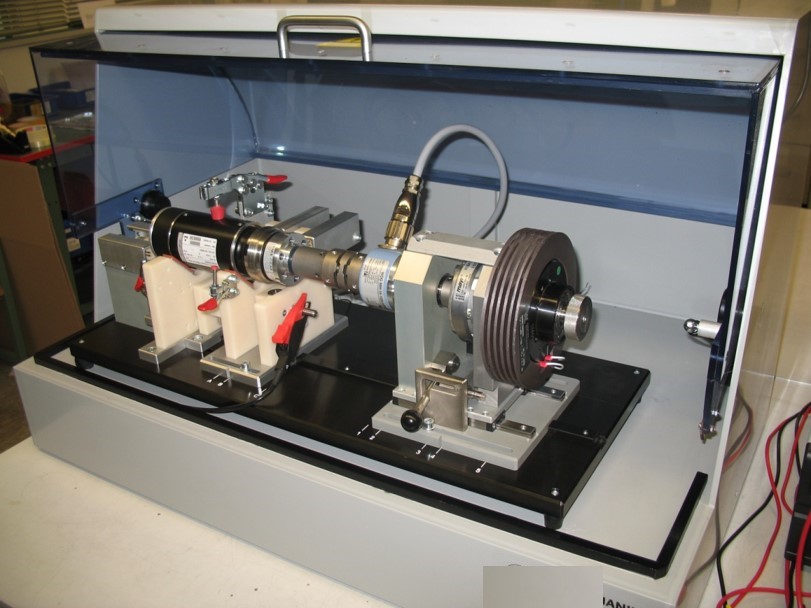
How does it work?
Sensors (microphones, accelerometers, laser vibrometers) capture sound or vibration. SonicTC decomposes the signal into frequency components (FFT), analyzes orders and psychoacoustic metrics, and compares the result against test specs or a trained AI model. For standard-compliant sound measurement, SonicTC uses octave band analysis with the A, B and Z weighting curves; the octave filters follow IEC and ANSI specifications.
Typical applications
- EOL noise testing on e-drives and combustion engines
- Comfort acoustics on seat adjusters and lifting systems
- Pump testing on water, fuel and hydraulic pumps
- Transmission diagnosis with order tracking
- Psychoacoustic evaluation of consumer goods
- Sound power determination on machines and devices
- Sound quality and sound intensity for comfort assessment
Related module
Every sound has a cause. We find it.
Frequently asked.
What is end-of-line noise testing?
End-of-line noise testing evaluates the airborne and structure-borne noise of every test object at the end of the production line, within the cycle time. Instead of subjective listening it delivers an objective OK/NOK result, evaluated using FFT, order analysis, envelope analysis and psychoacoustics.
Which sensors does noise testing require?
Microphones are used for airborne noise, accelerometers or laser vibrometers for structure-borne noise. SonicTC is hardware-open and works with sensors from Brüel & Kjær, Polytec, PCB and others; the choice depends on the test object and the environment.
How are limit values defined?
Limit values are derived from good-part references, statistically backed for example by control charts, or in anomaly mode without any defective parts. They can be readjusted later without programming.
Ready to experience acoustic test technology in your line?
Send us your part or schedule an online demo. First assessment within 24 hours.